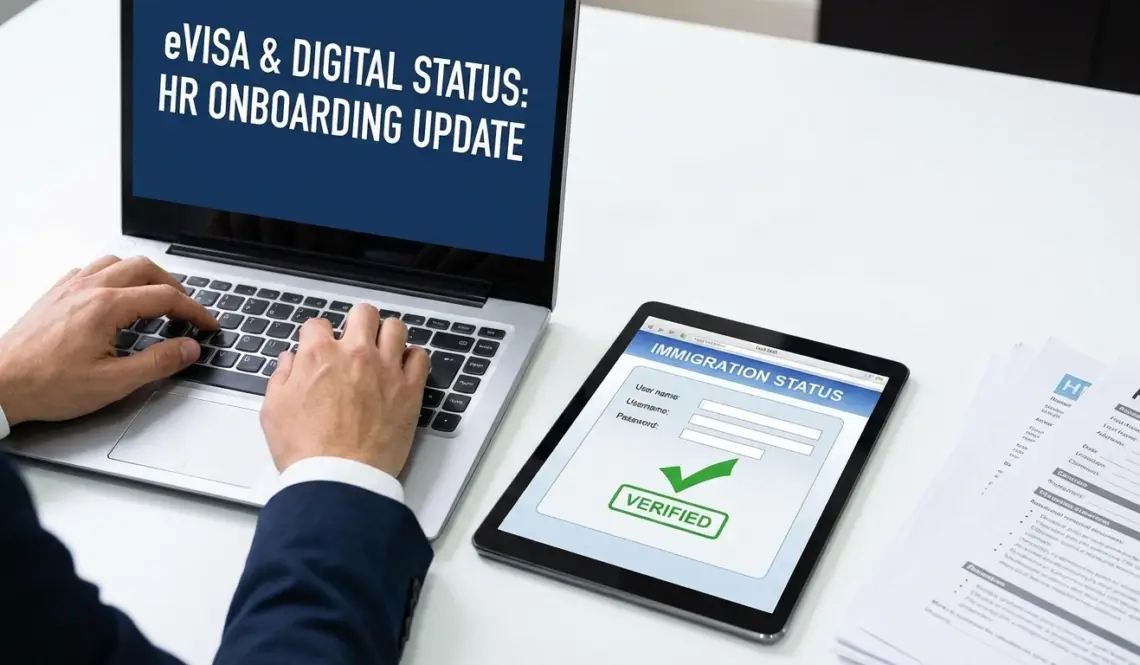
The UK’s move towards digital-only immigration status (eVisas) is not just a change for migrants. It is an operational change for employers. HR teams that still treat right to work as a “passport photocopy exercise” risk getting caught out by missed steps, expired permissions, or recruitment delays that could have been avoided with a tighter digital process.
Garth Coates Solicitors has been tracking the shift to eVisas and the practical risks that come with relying on digital records alone, including the consequences when a worker cannot access their status or when systems and processes do not line up. This article explains what eVisas mean in real onboarding workflows, what needs to change in HR compliance, and how to reduce disruption when digital status does not behave as smoothly as it should.
What an eVisa actually is (and why it changes HR processes)
An eVisa is a digital record of a person’s identity and immigration status, accessed via a UKVI account rather than a physical vignette, stamp or card. The Home Office position is that digital proof of status is part of a more streamlined, digital immigration system.
For HR, the practical impact is simple: more candidates will not be able to “show a document” in the way HR teams are used to. Instead, many will prove their right to work using an online check (typically via a share code).
Garth Coates’ broader commentary on the rollout highlights that the transition away from physical documents can create risk when individuals cannot access their digital record or when stakeholders do not understand the system.
Onboarding: what HR teams should do differently from day 1
1) Move “right to work” earlier in the hiring journey
Right to work checks must be completed before employment starts to build a statutory excuse. With eVisas, the practical bottleneck is often not the check itself — it is getting the candidate set up so they can generate a share code in time.
A stronger workflow is:
- trigger right to work steps at offer stage (not the day before start)
- set a clear internal deadline for receiving the share code
- have an escalation route if the candidate cannot access their UKVI account
For a deeper compliance overview, HR teams can refer to Garth Coates’ guide: Right to Work Checks: Avoiding Civil Penalties, Repeat Checks and Common HR Mistakes.
2) Standardise the “share code” process (and train managers to use it)
Where a person’s status is digital, they can use the GOV.UK service to get a share code, and the employer uses the share code + date of birth to check the live Home Office record.
This is where HR teams often slip:
- managers accept screenshots from the candidate rather than completing the employer check
- the check is done, but the organisation does not retain proof of the result and date
- the wrong type of code is requested (right to work vs other checks)
HR teams should have a short “how to” note in the onboarding pack, and a single internal checklist that every hiring manager follows.
3) Build an “eVisa friction” contingency into onboarding
Digital status can fail in predictable ways: expired linked passports, login issues, and simple digital literacy problems. Some applicants and workers have reported difficulties generating share codes or proving status during the wider shift to digital-only checks.
HR teams do not need to become immigration advisers — but they do need a plan for what happens when:
- the worker cannot generate a share code
- the right to work service does not show the expected permission
- the start date is approaching and the status is still unclear
Where the individual cannot prove status online or with documents, employers can use the Employer Checking Service route in eligible circumstances.
Ongoing checks: what changes once staff are in post
1) Time-limited permissions mean repeat checks — and eVisas do not remove that duty
Many sponsored and temporary routes have time limits. Where the permission is time-limited, employers must carry out repeat checks before expiry to maintain protection against civil penalties.
This is not optional admin. It is a key compliance control — especially for sponsor licence holders.
2) Create a single source of truth for immigration status tracking
eVisas make it easier to forget that immigration status can change. HR teams should maintain one central record that includes:
- the type of check completed (online/manual/IDSP/ECS)
- the date of the check and evidence saved
- any work restrictions (e.g., student work limits)
- the expiry date (where relevant) and follow-up reminders
The Home Office’s employer guidance explains that not everyone can be checked online, and employers must use the correct method for the person in front of them.
3) Sponsored workers: treat eVisas as part of sponsor compliance, not a separate HR task
For organisations sponsoring migrants, right to work checking sits inside a wider compliance framework: reporting, record keeping, and audit readiness. Failures can have consequences beyond civil penalties, including sponsor licence action.
The 3 most common eVisa-related HR mistakes (and how to fix them)
Mistake 1: Treating a share code as “proof” without doing the employer check
Fix: HR should require the employer-side GOV.UK check to be completed and saved every time.
Mistake 2: Doing the check, but not keeping a clean audit trail
Fix: Save the output (or evidence of the check), record the date, and store it securely for the required period.
Mistake 3: No plan for “can’t access UKVI account” scenarios
Fix: Build escalation steps into onboarding and know when the Employer Checking Service route is relevant.
Where to go deeper on work routes and business immigration
eVisas sit across multiple routes, but HR teams often meet them first through work visas and sponsorship. These Garth Coates pages are useful reference points:
- Skilled Worker Visa
- Self Sponsor Skilled Worker Visa
- UK Expansion Worker Visa
- UK Immigration Lawyers
- UK Immigration News
And for the eVisa policy shift and risks in context: UK’s New E-Visa Scheme – a potential risk for immigrant rights?.
HR teams do not need to fear eVisas — but they do need to update processes. The organisations that adapt fastest are the ones that standardise the share-code workflow, tighten record keeping, diarise repeat checks, and build a contingency plan for digital friction before it disrupts start dates.
For support reviewing onboarding processes, sponsor compliance, or right to work systems (including audit preparation), contact Garth Coates Solicitors via Contact or review Services & Fees to understand how the firm can help.
Ready to move forward with your UK immigration plans? Garth Coates Solicitors can guide you at every step — from eligibility checks and document preparation to submission and follow-up. If you’re launching a business, our uk start up visa team can help you build a strong application. Need support with work routes? Speak to a trusted skilled worker visa solicitor today. We also advise on the uk self sponsorship visa for entrepreneurs seeking more control. Studying in the UK? Our student visa solicitors are here to help — contact us now for tailored advice.