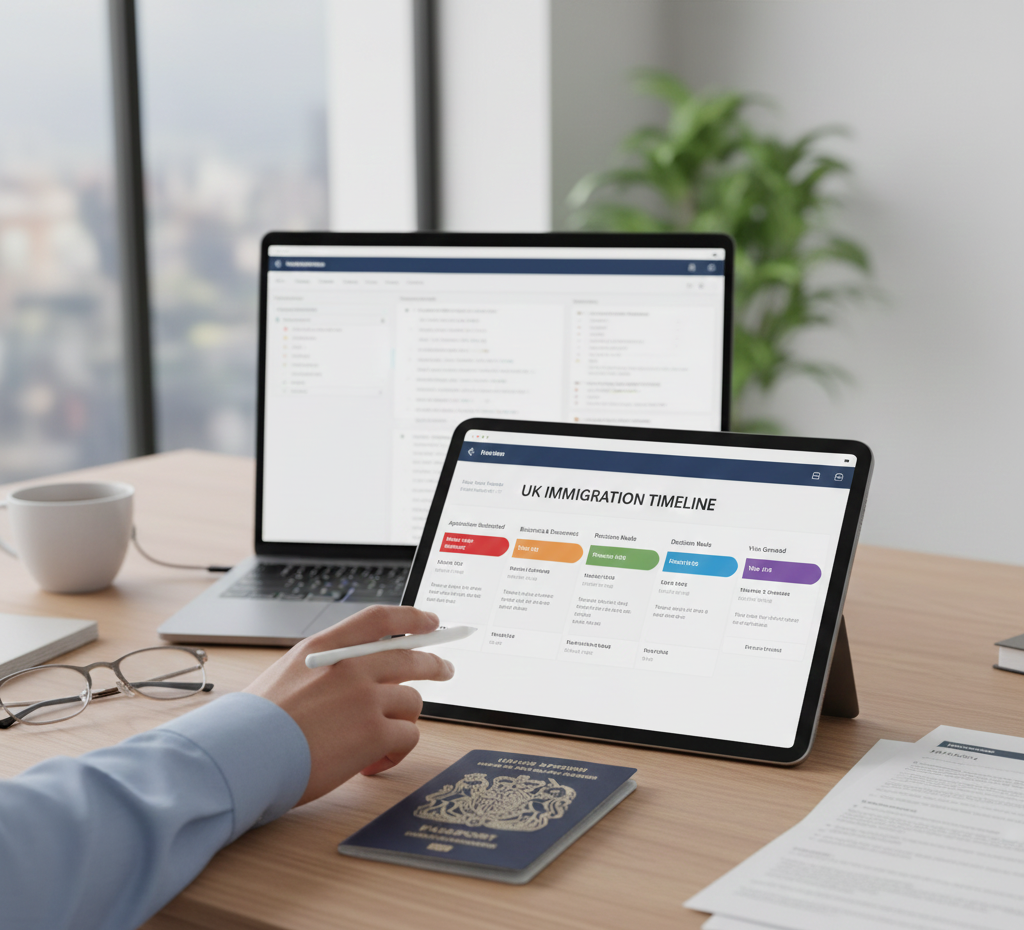
UK immigration decisions rarely run on a neat, predictable timetable. Even when an applicant does everything “right”, delays can still happen because of biometrics backlogs, verification checks, digital system issues, or shifting Home Office priorities. Garth Coates Solicitors often sees that the biggest practical risk is not the delay itself, but the knock-on effect: missed start dates, disrupted travel, employment gaps, sponsor compliance pressure, and families left in limbo.
This article sets out the delays people most commonly encounter, where they tend to arise in the process, and how applicants (and HR teams) can plan to reduce disruption.
Why UK immigration timelines slip
There is a reason “standard processing time” and “real-world processing time” can be 2 different things. The Home Office has been pushing digital transformation (including the move to eVisas), but that transition has not been friction-free, and system complexity continues to create operational drag. Garth Coates has discussed how digitalisation issues and legislative complexity can compound delays and confusion for applicants.
On a practical level, delays tend to come from:
- Evidence verification (financial records, employment, genuineness checks)
- Internal Home Office workloads (surges in certain routes)
- Biometrics appointment availability
- Further information requests (where documents are missing or inconsistent)
- Digital access issues (UKVI accounts, eVisa records, share codes)
A realistic timeline: the stages where delay happens
1) Before submission: preparation time is part of the “timeline”
Applicants often focus only on the Home Office decision time. In reality, the biggest controllable chunk is the preparation phase: collecting evidence, translating documents, correcting inconsistencies, and ensuring the application matches the route requirements.
For example, student applications hinge on correct CAS information and compliant financial evidence. Garth Coates’ Student visa guidance highlights timing rules around the CAS and when applications can be made.
Planning tip: Build in a buffer for document gathering and quality control — especially if the case involves relationship evidence (see Spouse visa and the guide on spouse visa relationship evidence).
2) Biometrics: the quiet bottleneck
Even with a perfectly prepared application, biometrics appointments can create delays. If an applicant cannot secure a convenient appointment slot, their “clock” effectively starts later than expected.
Planning tip: Treat biometrics as a scheduling priority and avoid leaving it to the last minute—especially where work start dates, course start dates, or travel are fixed.
3) The decision stage: “standard times” are guides, not guarantees
GOV.UK provides processing time guidance and a tool to check estimates. For many visa types, the Home Office publishes standard timelines (for example, guidance for applications made outside the UK) and also offers an online service to check expected decision time.
That said, applications can exceed the published standard where additional checks are needed, credibility is questioned, or documentation is unclear.
Planning tip: Use the GOV.UK checker for the relevant route and location (inside vs outside the UK), and plan on the basis that some cases run longer than the headline number.
4) After the decision: “admin time” still matters
Even after a decision is made, applicants may need time for:
- passport return (where applicable)
- setting up / accessing digital status
- starting employment (right to work checks)
- travel bookings and practical relocation steps
For employers, the move to digital status adds another operational layer. Garth Coates’ piece on eVisas and digital status explains why HR teams need stronger onboarding and repeat-check processes as more workers prove status digitally.
What delays to expect by route type
Work routes and sponsorship: timelines are often “2-track”
For sponsored work, there are typically 2 separate timelines:
- The employer’s sponsor readiness (licence, compliance, reporting capability)
- The individual worker’s visa processing timeline
Garth Coates covers these employer-side requirements in Sponsor licence application, Sponsor licence compliance and Sponsor licence suspension and revocation.
Planning tip (HR): build immigration steps into onboarding timelines and keep repeat-check diaries tight. Compliance failures can cause bigger problems than the original delay.
Family routes: relationship evidence is where time disappears
Family applications often slow down when the evidence is heavy, inconsistent, or poorly organised. The Home Office may scrutinise genuineness and living arrangements, and delays can appear if the file doesn’t make the story easy to verify.
Planning tip: Build the evidence pack like a case file—clear chronology, labelled documents, and a focused explanation (see UK family visas and Spouse visa relationship evidence).
Students: delays often come from funds + credibility questions
Student cases can slow down where financial evidence is borderline, the course choice is not well explained, or credibility concerns trigger additional scrutiny. Using the right timing rules and matching documents to the CAS matters (see Student visa and the guide on UK student visa requirements).
Settlement and citizenship: longer timelines, higher stakes
Settlement and nationality applications often have more “history” to assess: residence records, absences, good character issues, and documentary consistency. Garth Coates explains the broader pathway on Indefinite Leave to Remain (Settlement) and British citizenship applications.
Planning tip: applicants should audit absences and key dates early, because correcting a residence record late can be difficult (see also the article on British citizenship and days outside the UK).
EUSS: delays can become complex fast when status is refused
Where EU Settlement Scheme outcomes are refused or downgraded, the “timeline” can become an appeals/review timetable rather than a processing timetable. Garth Coates’ guide on EU Settlement Scheme refusals and appeal rights explains why remedy choice matters.
How to plan: practical steps that reduce disruption
- Start with the real deadline, not the ideal one
If a course starts on a fixed date or a job has a start date, work backwards and include time for evidence gathering and biometrics. - Make the evidence easy to verify
Most delays caused by “queries” can be traced to unclear documents, inconsistencies, or missing context. Organised bundles speed decisions. - Assume travel plans will be affected
Applicants should avoid booking non-refundable travel until they understand realistic timings and constraints. - Use the GOV.UK processing time tools
The Home Office provides a checker and processing time guidance. These are the most reliable references for broad expectations, even though individual cases can still run longer. - For businesses: treat immigration as a workflow, not a one-off task
Digital status, sponsor duties, and repeat checks mean HR needs a repeatable process (see Sponsor licence compliance and eVisas and digital status).
When a delay becomes “excessive”: what options exist
Most applicants can cope with a routine delay. The real concern is when the Home Office appears to be doing nothing for a prolonged period, especially where there are serious consequences (employment loss, family separation, or legal uncertainty).
Garth Coates has discussed the circumstances in which a Judicial Review-style approach may be considered for truly extreme delays in Can the Home Office be sued for extreme delay?.
For formal challenge routes in refusal and delay contexts, the firm also outlines options under UK visa refusals and Appeals and Judicial Review.
Delays are often unavoidable — but disruption is not. The difference is planning: choosing the right route, timing submissions properly, and presenting evidence in a way that reduces queries and credibility doubts.
For tailored advice on realistic timelines, evidence planning, and next steps when a case is delayed or refused, contact Garth Coates Solicitors via the Contact page or explore support through UK immigration lawyers. For clarity on costs, see Services & fees.
Ready to move forward with your UK immigration plans? Garth Coates Solicitors can guide you at every step — from eligibility checks and document preparation to submission and follow-up. If you’re launching a business, our uk start up visa team can help you build a strong application. Need support with work routes? Speak to a trusted skilled worker visa solicitor today. We also advise on the uk self sponsorship visa for entrepreneurs seeking more control. Studying in the UK? Our student visa solicitors are here to help — contact us now for tailored advice.