In brief
- A TB certificate is generally needed for entry clearance applications where you are coming to the UK for more than six months and have recently lived in a listed country.
- Nationality alone does not decide it; recent continuous presence in a listed country does.
- The certificate must come from a Home Office-approved clinic listed on GOV.UK.
- It is normally valid for six months from the date of the chest X-ray and must not have expired.
- Children under 11 are assessed by a clinician rather than X-rayed; pregnant applicants have several testing options.
- Check the current GOV.UK country list and clinic list before booking.
Many people applying for a UK visa from overseas must show a certificate proving they do not have active pulmonary tuberculosis (TB). This guide explains who needs one, how to get it and how to avoid common problems.
Who needs a TB certificate?
The rules are in Appendix Tuberculosis of the Immigration Rules. They apply to entry clearance applications, which are visa applications made from outside the UK. In general, you need a certificate if both of these apply:
- you are coming to the UK for more than six months; and
- you have been continuously present in one or more listed countries for six months or more, including some time in the six months before you apply.
Nationality alone does not decide this. What matters is where you have lived recently. Your time can be spread across several listed countries.
The requirement can apply to routes such as the Student visa, the Skilled Worker visa, the Spouse visa and family reunion applications. It also applies to children. Fiancé(e)s and proposed civil partners must provide a certificate even though they are admitted for a shorter period.
Who does not need one?
- People travelling for six months or less, for example on a Standard Visitor visa.
- Accredited diplomats.
- Returning residents who have not been away from the UK for more than two years.
Applications made from inside the UK are generally outside the requirement. Some routes may still be treated differently, so check the GOV.UK guidance for your route.
A previous BCG vaccination (a TB vaccine) does not remove the need for a certificate. A note from your own doctor is not accepted either.
Which countries are listed?
The list is in paragraph TB6 of Appendix Tuberculosis and covers roughly 100 countries. It is based on World Health Organization data and can change, so always check the current list on GOV.UK before you apply. It includes countries such as Bangladesh, China, Ghana, Hong Kong, India, Kenya, Nigeria, Pakistan, the Philippines, South Africa and Vietnam.
Step 1: find an approved clinic
Your certificate must come from a clinic approved by the Home Office and listed on GOV.UK. A certificate from any other clinic will not be accepted.
Two points to note:
- Some listed countries have no approved clinic. GOV.UK marks these as places where you must get tested in another country, so you may need to travel.
- Approved clinics also exist in some countries that are not on the TB6 list.
Use the official GOV.UK TB test pages to find a clinic and check the country list.
Step 2: book and attend the test
Book directly with the clinic. Fees vary by country and clinic, so ask for the price when you book. Ask what you must bring. Clinics usually ask for your passport, and some ask for photographs or medical records, but requirements differ.
What the test involves
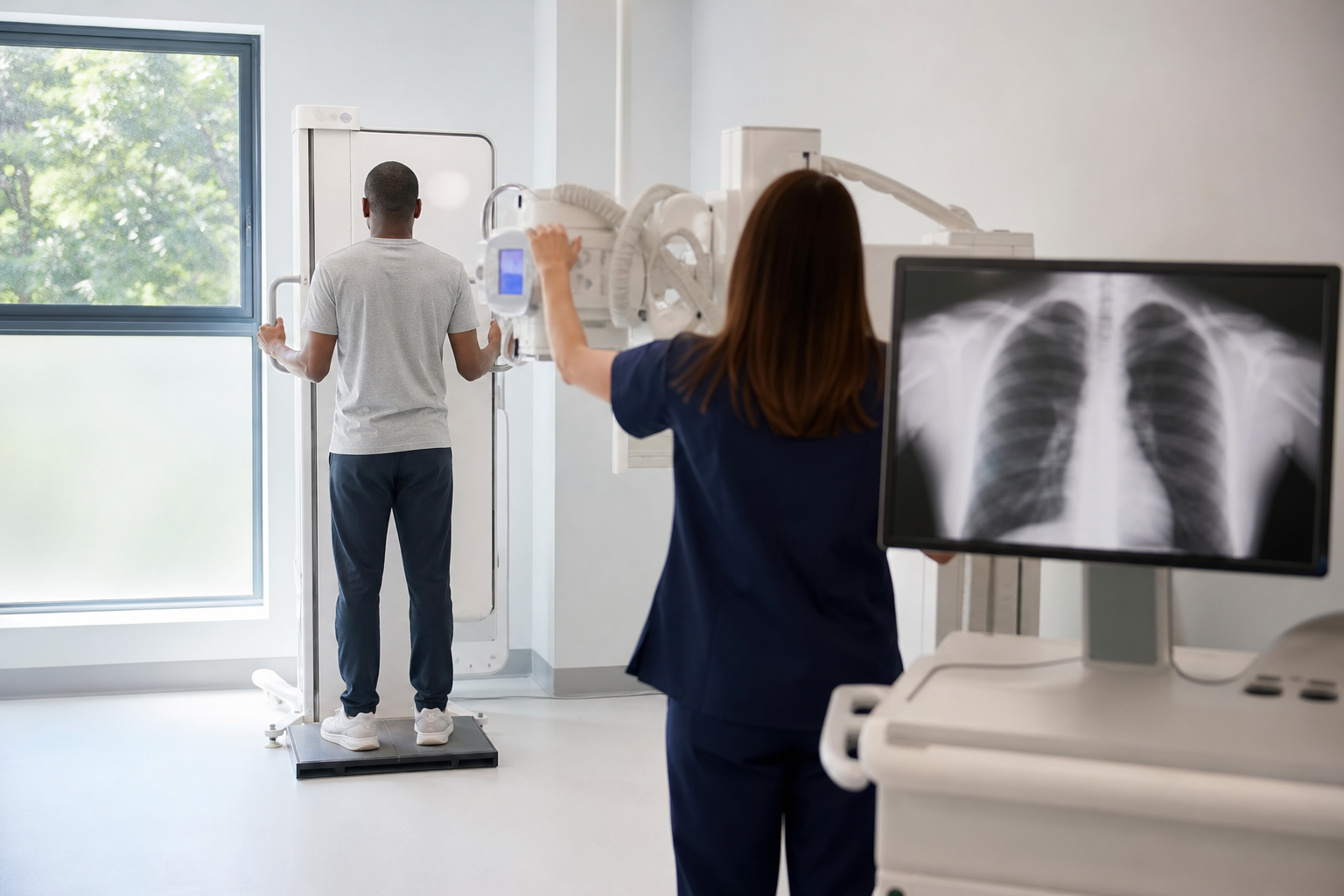
- Adults and children aged 11 and over: a chest X-ray. If the result is unclear, you may be asked for a sputum sample (a sample of mucus from the lungs).
- Children under 11: they do not normally have a chest X-ray. A clinician assesses the child and a health questionnaire is completed. A certificate can be issued if the clinician is satisfied that active TB is not present.
- Pregnant applicants: the options are an X-ray with shielding in the second or third trimester, a sputum test, or waiting until after the birth. A sputum test may cost extra and results can take up to eight weeks. Ask the clinic about timing.
What the certificate must show
The certificate must:
- be issued by a Home Office-approved practitioner;
- confirm that you were screened for active pulmonary TB and that it is not present; and
- be issued within the six months before your application date, and not have expired.
GOV.UK guidance says a certificate is normally valid for six months from the date of the chest X-ray. Where a certificate follows sputum testing, it must record that.
How to avoid delays
- Use an approved clinic only. Check the clinic against the GOV.UK list before you pay.
- Time the test carefully. Do not test too early. If your certificate has expired when your application is considered, the decision maker can ask for a new one. Do not leave it too late either, as clinic appointments and results take time.
- Check your details. As practical advice, make sure the name and passport details on the certificate match your passport exactly. Ask the clinic to correct any error before you leave.
- Plan for sputum tests. Results can take weeks, so allow for this in your timetable.
- Include the certificate. A missing or invalid certificate means a mandatory requirement is not met. Depending on the route, this may lead to refusal or rejection of the application.
Employers sponsoring workers should build TB testing into their onboarding timetable. Poor planning can hold up applications.
If the result is abnormal
If the clinic suspects active pulmonary TB, no certificate is issued. The doctor will report the diagnosis to the health authorities. You may need to complete treatment before a certificate can be issued. The current position on treatment and retesting should be checked on GOV.UK.
If you cannot obtain a certificate
The rules allow the decision maker to waive the requirement in limited cases. This is where the applicant is unable to obtain a certificate and it is reasonable to waive it on the specific facts. One example is a refugee who fled a conflict before they could be tested. An urgent job or business reason is not a ground for a waiver.
How Garth Coates Solicitors can help
We advise individuals, families and employers on UK entry clearance applications and on dealing with refusals. If you would like help preparing an application or are unsure whether the requirement applies, please request a consultation.
This article is general information and was correct on 4 November 2026. It is not legal advice on your circumstances; immigration rules and fees change often. For advice on your case, request a consultation.